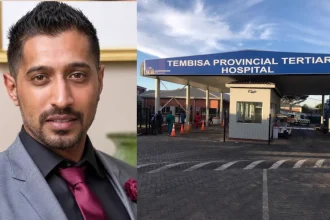
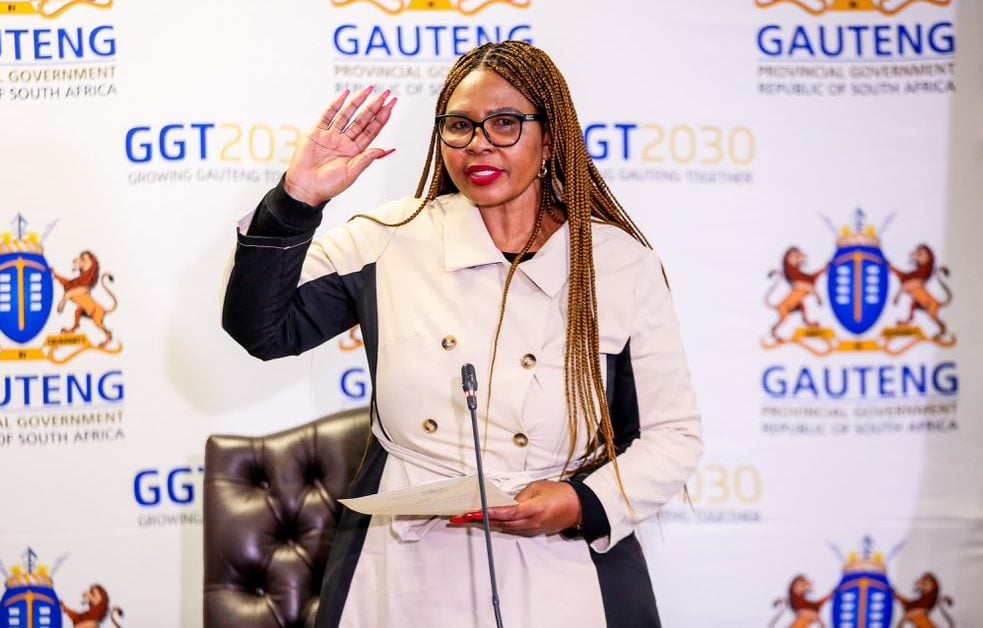
Gauteng Premier Panyaza Lesufi and Health MEC Nomantu Nkomo-Ralehoko are under growing pressure following revelations that the Special Investigating Unit (SIU) uncovered massive corruption at Tembisa Hospital, amounting to more than R2 billion in looted funds. Critics accuse the provincial leadership of failing to take meaningful disciplinary or legal action against those implicated.
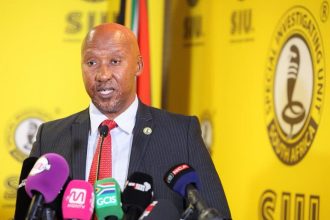
The SIU’s interim report paints a damning picture of widespread graft within the Gauteng Department of Health (GDoH), implicating hospital staff, contractors, and senior officials. The report states that both departmental officials and service providers “abdicated their duties,” allowing large-scale theft and mismanagement to go unchecked.
Initially, a December 2022 preliminary report found R850 million in fraud and corruption at the hospital. The latest update, released last month, shows that the investigation has expanded to cover more than R2 billion in suspicious transactions, with probes now extending from 2018 to 2024. The SIU expects to complete its full investigation by November 2027.
Over R120 million traced to officials
More than 15 current and former officials have reportedly benefited from the corruption schemes, collectively pocketing about R120 million. The SIU has already prepared 116 disciplinary referrals involving 13 officials, with 108 of these referred directly to the Gauteng Department of Health.
Health MEC Nomantu Nkomo-Ralehoko said her office has been “hard at work” since her appointment in October 2022, implementing governance reforms and disciplinary actions based on the SIU’s findings.
She confirmed that 11 officials were recommended for disciplinary or criminal proceedings, including five Supply Chain Management employees who allegedly failed to comply with procurement policies.
“The main charges were gross misconduct for failure to comply with the decentralised Supply Chain Management policy of 2019 and gross misconduct which prejudices the department in line with the Public Finance Management Act,” she said.
Three employees were found guilty and dismissed, while others—including Duduzile Nobugwana, MA Maphumulo, and NL Kobe—resigned mid-hearing. L Mojela, a senior supply chain director, retired during proceedings.
Another key figure, Dr Ashley Mthunzi, who was implicated in the scandal, died in 2024. His colleague, Dr Lekopane Mogaladi, continues to face disciplinary proceedings.
Political backlash intensifies
The Democratic Alliance (DA) in Gauteng expressed outrage over what it described as a lack of accountability. The party’s provincial health spokesperson, Madeleine Hicklin, accused the government of shielding senior officials and failing to blacklist implicated service providers.
“People died due to a lack of treatment, food, and care — the direct result of corruption and neglect by Tembisa Hospital management, the GDoH, and the Gauteng Premier’s office,” said Hicklin.
She criticised the release of heavily redacted forensic reports and questioned why pension funds of implicated officials who resigned or retired had not been frozen.
“Premier Lesufi continues to shield GDoH officials, including the HOD and Health MEC, Nomantu Nkomo-Ralehoko,” Hicklin added.
The Organisation Undoing Tax Abuse (Outa) echoed similar concerns. CEO Wayne Duvenage said the lack of decisive disciplinary measures suggested that senior officials had not treated the matter with the seriousness it deserved.
“The senior executives at the Department of Health, as well as the MEC and the Premier, are all found wanting for their inaction. Their silence and lack of urgency make them part of the problem,” Duvenage said. “The question then becomes: what do they know that caused them to look away for so long?”
Premier’s office hits back
Premier Lesufi’s spokesperson, Sizwe Pamla, dismissed the accusations as “baseless and ill-informed,” stressing that Lesufi had played a key role in initiating the ongoing SIU investigation.
“The premier signed a secondment agreement with the SIU and endorsed its application for a Presidential Proclamation to ensure stolen funds are recovered and the full scope of the Tembisa syndicate exposed,” said Pamla.
Pamla added that Lesufi would personally oversee the implementation of the SIU’s recommendations and had instructed the health department to submit quarterly progress reports to his office.
Accountability still in question
Despite reassurances from government, pressure continues to mount as the public and civil society demand tangible outcomes. Gauteng Health officials say that blacklisting of companies implicated in the scandal will only occur once the final SIU report is released.
With the investigation set to run until 2027, and billions still unaccounted for, the Tembisa Hospital scandal remains a defining test of political will and institutional integrity in Gauteng. For now, critics say the province’s leadership is running out of excuses — and time.