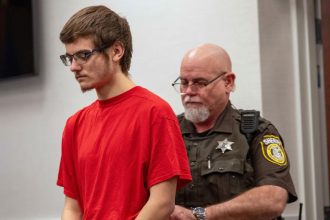
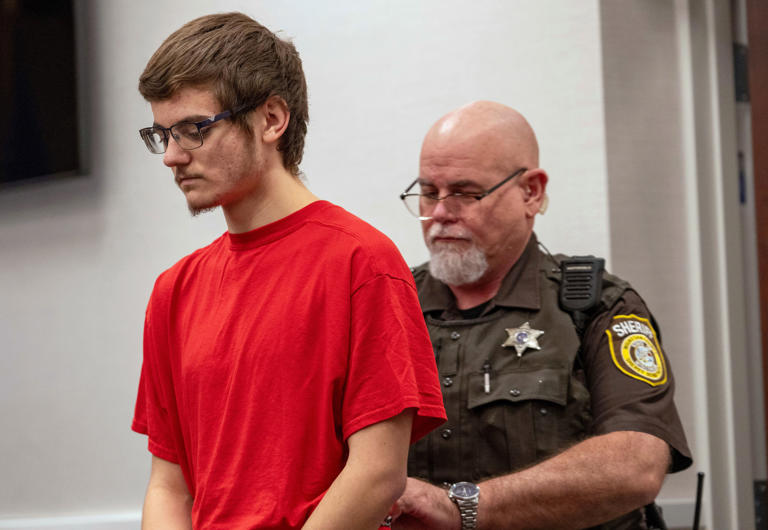
An 18-year-old man accused of murdering his parents as part of a plot to finance the assassination of former US president Donald Trump has pleaded guilty in a Wisconsin court.
Nikita Casap entered guilty pleas to two counts of first-degree intentional homicide in the Waukesha County Circuit Court, relating to the deaths of his mother, Tatiana Casap, and his stepfather, Donald Mayer. The killings occurred last year at the family home in the village of Waukesha.
In return for the guilty plea, prosecutors agreed to drop seven additional charges, including counts related to hiding a corpse and theft. Each homicide charge carries a mandatory life sentence, although the court retains discretion on whether Casap may become eligible for parole at a later stage.
During the brief hearing, Casap appeared visibly shaken and spoke only to confirm that he understood the proceedings. Judge Ralph Ramirez asked him a series of questions to ensure the plea was entered knowingly and voluntarily, to which Casap responded simply, “Yes, your honour.”
Casap is scheduled to be sentenced on March 5. Judge Ramirez may allow parole eligibility after 20 years on each count, though that decision will be made at sentencing.
Outside court, Waukesha County district attorney Lesli Boese said she would argue strongly against any possibility of parole. She described Casap as a serious threat to the community and said the nature of the crimes left little room for confidence in rehabilitation.
According to court documents, investigators believe Casap shot both his mother and stepfather on or around 11 February. He then remained in the house with their decomposing bodies for several weeks before fleeing the state.
Prosecutors allege that Casap drove across the country in his stepfather’s SUV, taking approximately R260,000 in cash, along with jewellery, passports, a firearm and the family dog. He was arrested during a routine traffic stop in Kansas on 28 February.
Federal authorities have painted a far more alarming picture of the motive behind the killings. In a federal search warrant, investigators said Casap had been planning the murders in advance, allegedly to gain financial independence and resources to carry out a political assassination.
The warrant states that Casap purchased a drone and explosive materials, drafted a written manifesto calling for Trump’s assassination, and communicated his intentions to others online. Some of those communications reportedly involved a Russian-speaking individual, although authorities have not disclosed that person’s identity or location.
Investigators also found messages on Casap’s phone from January 2025 in which he asked how long he would need to hide before being moved to Ukraine. In one message, he asked whether he would be able to live a normal life there even if his actions were discovered.
Federal officials said the killing of his parents appeared to be a deliberate step to secure money and freedom of movement in pursuit of the broader plan to overthrow the US government. No evidence has been presented that Casap came close to acting on the alleged assassination plot beyond planning and communication.
The case has drawn attention for its extreme violence, the involvement of political extremism, and the psychological questions surrounding a teenager capable of such acts. For now, Casap remains in custody, facing the likelihood of spending the rest of his life in prison.

![Chinese and Iranian naval vessels dock near Simon’s Town as South Africa hosts a Chinese-led BRICS-linked maritime exercise amid renewed US scrutiny. [Dwayne Senior/Bloomberg via Getty Images] ©provided by Business Insider Africa](https://myvirgo.co.za/wp-content/uploads/2026/01/warship-south-africa-150x150.png)