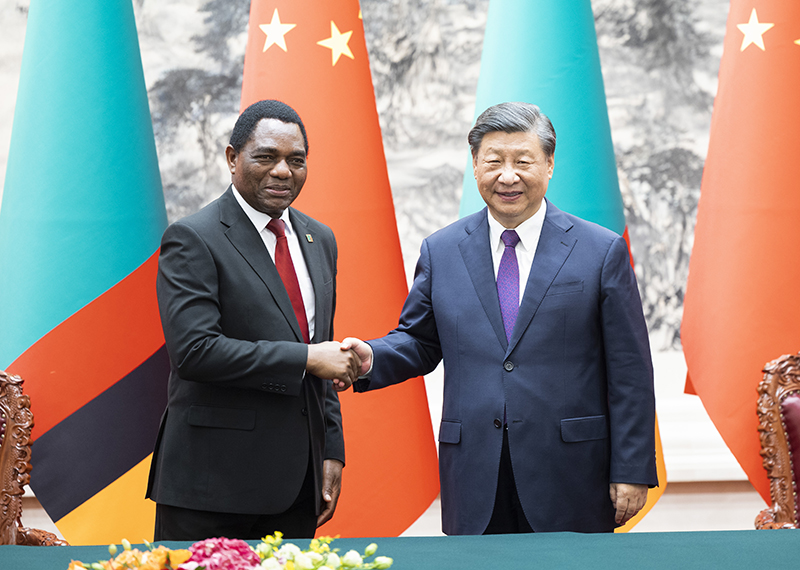
Zambia has officially become the first African country to accept China’s yuan (renminbi) for the payment of mining taxes and royalties, a move that underscores Beijing’s growing financial footprint in Africa’s most critical resource industries.
The Bank of Zambia confirmed that payments in renminbi began in October, marking a significant change in how Africa’s second-largest copper producer manages revenue from its mining sector.
China’s role in Zambia’s copper economy
The move reflects China’s central role in Zambia’s economy. China is both Zambia’s largest copper buyer and one of its biggest creditors, making the yuan increasingly relevant to the country’s trade and debt obligations.
According to reports, Chinese mining companies operating in Zambia have already started settling part of their tax obligations in yuan, rather than US dollars. This aligns with existing trade flows, as much of Zambia’s copper exports are destined for China and are already paid for in renminbi.
“A large portion of copper exports go to China, and Chinese mining firms already receive some, if not all, of their export payments in renminbi,” the Bank of Zambia said in a statement.
Reserve management and debt considerations
The central bank said the decision forms part of its broader reserve diversification strategy.
“The Bank of Zambia has the diversification and building-up of its reserves as a key objective, and purchasing renminbi enables the bank to actualise this objective,” it said.
Holding yuan is also expected to reduce Zambia’s debt-servicing costs. The central bank noted that accepting renminbi would allow the country “to service its debts to China in a more cost-effective manner,” avoiding currency conversion costs associated with dollar-based payments.
Africa as a testing ground for the yuan
Zambia’s move comes amid a wider push by China to internationalise the yuan, with Africa increasingly serving as a testing ground for the strategy.
In October, Kenya converted part of its Chinese debt into yuan in a bid to ease pressure on its strained public finances. The restructuring of its $5 billion railway loan into yuan-denominated debt is expected to save the country roughly R4.6 billion a year, based on current exchange rates.
Ethiopia has also begun discussions on similar arrangements, while Zambia itself had previously indicated it was considering such steps.
New exchange rate system introduced
To support the shift, the Bank of Zambia recently began publishing an official renminbi-kwacha exchange rate, allowing mining companies to choose whether to sell US dollars or yuan when paying taxes.
This builds on regulations introduced in 2018 and expanded in 2020, which required mining firms to sell foreign currency earnings to the central bank. Those measures were aimed at shoring up Zambia’s depleted reserves during its debt crisis.
A growing currency footprint
The acceptance of yuan for mining taxes signals that China’s influence in Africa’s mining sector is no longer limited to ownership, financing, or trade alone. It is now extending directly into currency usage and financial systems.
As African countries search for ways to manage debt, stabilise reserves, and reduce reliance on the US dollar, Zambia’s decision may serve as a model — or a warning — depending on how the balance of power in global finance continues to shift.