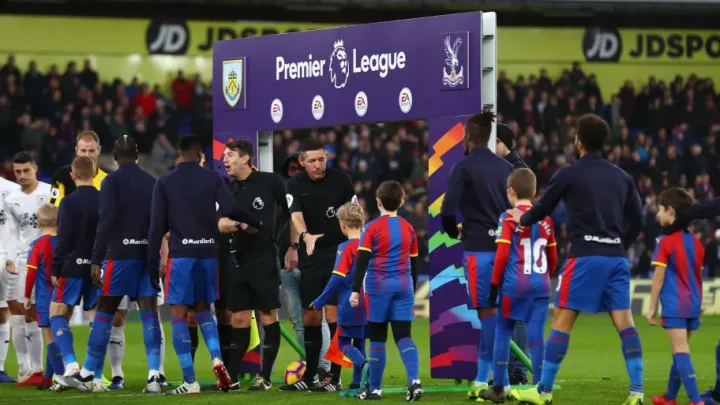
Premier League clubs are under fire from politicians, campaigners, and fans after it was revealed that some teams are charging parents as much as R18,000 for children to walk out as matchday mascots—an experience once seen as a simple childhood dream.
The backlash comes amid revelations that Nottingham Forest demands an eye-watering R18,000 for its top-tier mascot package—more than the average monthly rent for a three-bedroom home in the city. Other clubs including Brighton & Hove Albion, Crystal Palace, Ipswich Town, and West Ham United have also come under scrutiny for continuing to charge families for mascot spots despite the league’s billion-rand broadcasting deals and affluent ownership structures.
According to an investigation by The Telegraph, the cost of premium mascot experiences in the Premier League has surged by 157% since 2020—sparking accusations that working-class fans are being priced out of cherished traditions.
A Divided League: Some Clubs Charge, Others Scrap Fees
While several Premier League clubs still monetise mascot slots, nearly half now offer the experience for free. Aston Villa, for example, has quietly removed all fees for mascots, and West Ham has reportedly cut its prices significantly in recent months.
But for many campaigners, these changes aren’t enough. Public Accounts Commission chairman Clive Efford MP condemned the pricing practices as “pure greed.”
“Pricing working-class families out of ever being a mascot like this is pure greed,” Efford said. “Considering the millions Premier League clubs get each year from TV deals, how can they justify charging for what for many is a childhood dream? They should be ashamed.”
Dame Caroline Dinenage, chair of the Culture, Media and Sport Committee, echoed the criticism, calling the trend “a shame.”
“It feels a shame that some clubs are profiting by pricing so many young fans out of this wonderful experience,” she said.
Clubs Defend Prices Citing Community Access
Despite the uproar, clubs like Nottingham Forest and Brighton have defended their practices, claiming that free mascot places are regularly made available through charitable and community partnerships.
In a statement, Nottingham Forest said it invites a minimum of two matchday mascots for every home game—one of whom is selected from its Community Trust programmes and attends free of charge. The club added that in some fixtures, up to five children have participated for free.
“All these go to deserving children and/or young participants from our Community Trust programmes,” the club said.
Brighton also provides two free mascot spots at each home game and covers all mascot experiences for away fixtures. While the club charges up to R4,150 (around £415) for premium packages, it says these are popular and frequently sell out, driven by public demand rather than profit motives.
“Packages tend to sell out within a few weeks of being made available,” Brighton noted. “We feel they represent value for money and give children an unforgettable experience.”
Lower-League Clubs Take a Different Approach
In contrast, several lower-league clubs have taken a more inclusive approach. Tranmere Rovers, for example, offers free mascot experiences to young fans who purchase a club kit—a gesture many critics say highlights the greed of top-tier teams by comparison.
The disparity between grassroots generosity and Premier League commercialism is drawing renewed calls for regulation.
Regulatory Pressure Mounts as New Oversight Looms
The controversy comes at a pivotal time for English football. With the introduction of a new independent football regulator on the horizon, many believe the time has come for stricter rules to prevent exploitation of fans and families.
Campaigners are urging the forthcoming regulator to impose caps or transparency standards on mascot pricing—especially in light of the league’s enormous financial clout. In the 2023–2024 season alone, Premier League clubs shared more than R55 billion in broadcast revenue.
While some clubs argue that mascot packages are optional and include additional perks such as hospitality, kit, and meet-and-greet opportunities, critics maintain that these extras should not come at the cost of exclusivity.
“It shouldn’t be about who can afford it,” said one supporter. “It should be about making magical moments accessible to every child who loves football.”
Conclusion: Between Dreams and Profits
What was once a heartwarming pre-match tradition has, for some clubs, turned into a profit centre. As the Premier League continues to cash in on global popularity, the divide between grassroots loyalty and top-flight monetisation appears to be growing. Whether the incoming football regulator will intervene remains to be seen, but one thing is clear: pricing out the next generation of fans may have long-term consequences money can’t fix.