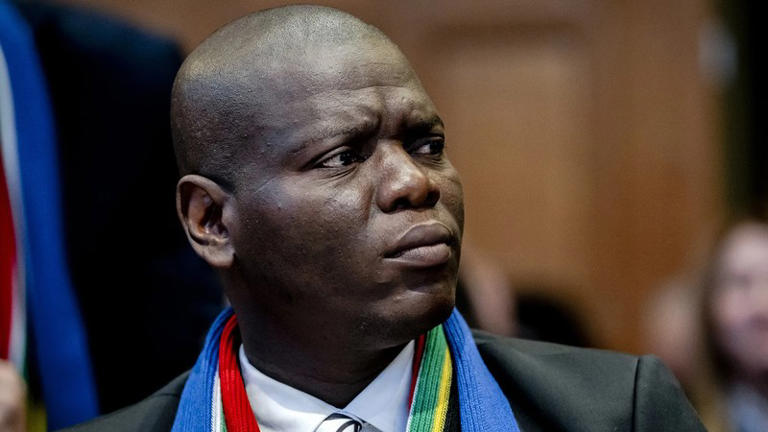
South Africa’s Minister of International Relations and Cooperation, Ronald Lamola, has hit back at claims made by US Secretary of State Marco Rubio alleging that Afrikaners are victims of racial persecution. Lamola described the accusations as politically motivated and unsupported by evidence, warning that they distort South Africa’s reality for foreign political gain.
The diplomatic clash erupted on social media platform X (formerly Twitter) after US President Donald Trump announced that no American officials would attend next week’s G20 Summit in Johannesburg. Trump justified the boycott by claiming that “Afrikaners are being slaughtered” and accused the South African government of ignoring violence against white farmers.
Trump’s remarks were amplified by Rubio, who posted:
“Afrikaners have been continuously subjected to violent racial discrimination by the South African government. I applaud @POTUS’s decision to not waste taxpayer dollars sending our diplomats to the G20 while this heinous violence continues.”
Afrikaners have been continuously subjected to violent racial discrimination by the South African government.
I applaud @POTUS‘s decision to not waste taxpayer dollars sending our diplomats to the G20 while this heinous violence continues. https://t.co/0dNXegrOou
— Secretary Marco Rubio (@SecRubio) November 8, 2025
Lamola swiftly countered, stating that no credible evidence supports claims of racial persecution or what some US politicians call “white genocide.”
“Claims of a ‘white genocide’ or its euphemism, Afrikaner persecution, are imagined and used for political expediency. Data does not support the narrative,” Lamola wrote.
Claims of a ‘White genocide’ or its euphemism Afrikaner persecution are imagined and used for political expediency.
Data does not support the narrative. From April 2020 to March 2024:
225 people were victims of crime on farms in South Africa, according to the police.
Many… https://t.co/WiJDMlyPws
— Minister: International Relations and Cooperation (@RonaldLamola) November 8, 2025
According to South African Police Service data cited by Lamola, 225 people were victims of crimes on farms between April 2020 and March 2024, of whom 101 were black farmworkers and 53 were white farmers.
“We continue to fight crime in all its manifestations. We will host a very successful G20. Thank you for your kind attention on this matter,” he concluded.
Diplomatic Rift Deepens Between Pretoria and Washington
Lamola’s rebuttal underscores a growing diplomatic divide between South Africa and the United States, whose relationship has become increasingly strained over issues including Russia, China, and Gaza.
Analysts say the exchange reflects how domestic US politics are shaping global perceptions of South Africa, a trend that Pretoria has repeatedly criticised.
Former South African ambassador to Portugal, Dr Kingsley Makhubela, told Newzroom Afrika that despite Trump’s boycott announcement, US officials stationed in Pretoria are likely to attend the G20 Summit in some capacity.
“I think he meant to say no one will come from Washington to attend this meeting,” Makhubela said. “They will send an official from the embassy, but that person will act under strict instructions from Washington, which could make it difficult to reach consensus on the final G20 communiqué.”
He added that Washington’s objections likely stem from the summit’s focus on global solidarity, diversity, and interdependence — themes that the Trump administration views skeptically.
A Test of South Africa’s Foreign Policy Resilience
With tensions flaring just days before the G20 Summit, Lamola’s remarks represent South Africa’s firm stance on sovereignty and factual integrity in its international relations.
Observers note that Pretoria’s handling of the controversy could set the tone for future engagements with the United States, particularly as global politics become increasingly influenced by domestic populism and election cycles.
As South Africa prepares to host the G20 Summit in Johannesburg, the government remains determined to defend its reputation and assert its independence in shaping foreign policy on its own terms.