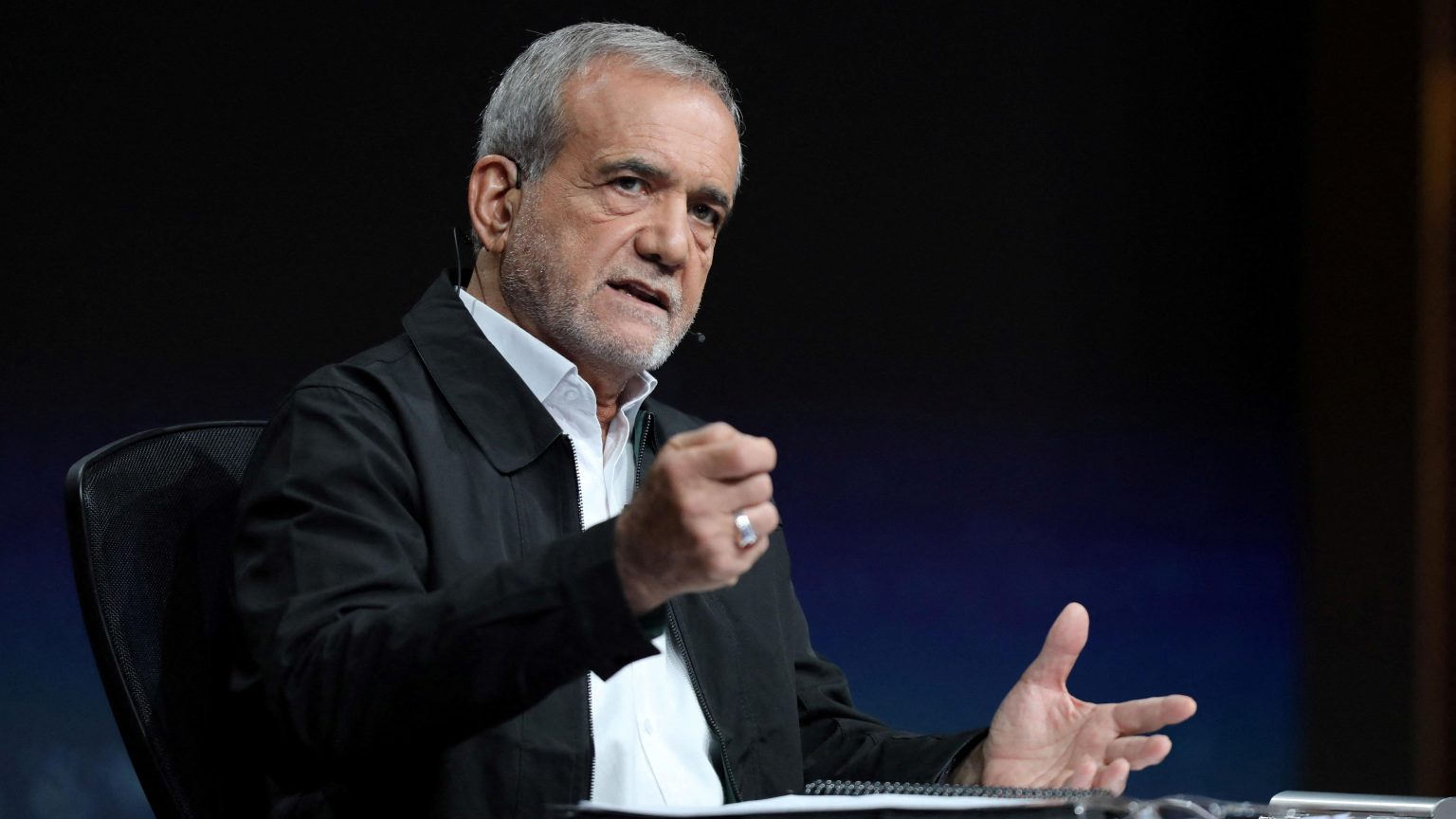
Iran has declared that it is engaged in what it calls a “full-scale war” with the United States, Israel and Europe, marking a sharp escalation in rhetoric at a time of mounting internal unrest and growing international pressure.
According to London-based independent outlet Iran International, Iranian President Masoud Pezeshkian said Tehran now faces an all-encompassing conflict with Western powers aimed at preventing Iran from standing “on its own feet.”
“In my view, we are in an all-out war with the United States, Israel, and Europe; they do not want our country to stand on its own feet,” Pezeshkian said during an online interview.
‘More Complex Than the Iran-Iraq War’
Pezeshkian described the current confrontation as more difficult and complex than the Iran-Iraq War of the 1980s, a conflict that killed hundreds of thousands and defined a generation of Iranians.
“In the war with Iraq, the situation was clear; they fired missiles, and it was clear where we would strike back,” he said.
“But here, they are besieging us in every respect — economically, culturally, politically, and in terms of security.”
His remarks come as major Iranian cities continue to see protests, with demonstrators calling for political change and relief from economic hardship under the Islamic Republic’s rule.
Trump and Netanyahu Talks Add Fuel
According to Newsweek, the timing of Pezeshkian’s comments appears deliberate. Days later, US President Donald Trump met Israeli Prime Minister Benjamin Netanyahu at Mar-a-Lago in Florida.
Following the meeting, Trump issued a stark warning about Iran’s nuclear ambitions.
“Now I hear that Iran is trying to build up again, and if they are, we’re going to have to knock them down,” Trump told reporters, as quoted by Al Jazeera.
“We’ll knock the hell out of them. But hopefully that’s not happening.”
Trump warned that any retaliation against Tehran would be “more powerful than last time.”
Fallout From the Iran-Israel War
The comments come six months after a brief but intense war between Iran and Israel, which ended on June 22 when US forces bombed three Iranian nuclear sites.
Iranian authorities claim more than 1,000 Iranians were killed and several thousand injured during the 12-day conflict. In contrast, 28 people were killed in Israel by Iranian strikes. Tehran also launched a retaliatory attack on a US military base in Qatar.
Trump has since urged Iran to return to negotiations.
“If they want to make a deal, that’s much smarter,” he said.
“They could have made a deal the last time before we went through a big attack on them.”
Nuclear Denials and Missile Red Lines
Iran continues to deny seeking a nuclear weapon, but has firmly refused to negotiate its missile programme, which Tehran considers the backbone of its national defence.
Analysts warn that another military strike could trigger a far more aggressive response.
Trita Parsi, executive vice president of the Quincy Institute, told Al Jazeera that Iran believes restraint now would invite repeated attacks.
“The Iranians understand that unless they strike back hard and dispel the view that Iran is a country that you can bomb every six months, Israel will bomb them every six months,” Parsi said.
A Dangerous Moment
With internal dissent growing, diplomatic channels strained, and military threats escalating, Iran’s declaration of a “full-scale war” signals a dangerous new phase in its confrontation with the West — one where economic pressure, cyber conflict, regional warfare and political destabilisation may collide.