The Economic Freedom Fighters (EFF) have strongly criticised a newly gazetted policy direction by Minister of Communications and Digital Technologies Solly Malatsi, warning that it could allow Elon Musk’s satellite internet service, Starlink, to operate in South Africa in a way that undermines transformation laws and national security.
The party argues that the policy weakens local ownership requirements in the information and communications technology (ICT) sector and unfairly favours foreign companies, particularly those linked to Musk, who has recently accused South Africa of enforcing what he calls “racist laws”.
Policy amendment sparks political backlash
The Department of Communications and Digital Technologies has gazetted a final policy direction on Equity Equivalent Investment Programmes (EEIPs), which allow certain foreign-owned companies to meet empowerment obligations through alternatives to direct ownership.
The directive effectively amends how transformation requirements under legislation such as the Black Economic Empowerment (BEE) Act are applied within the ICT sector.
The move comes amid public criticism by Musk, the world’s richest individual, who has used his online platforms to attack South Africa’s transformation laws. He has also been accused by critics of spreading misinformation about the country.
EFF labels gazette ‘unlawful’
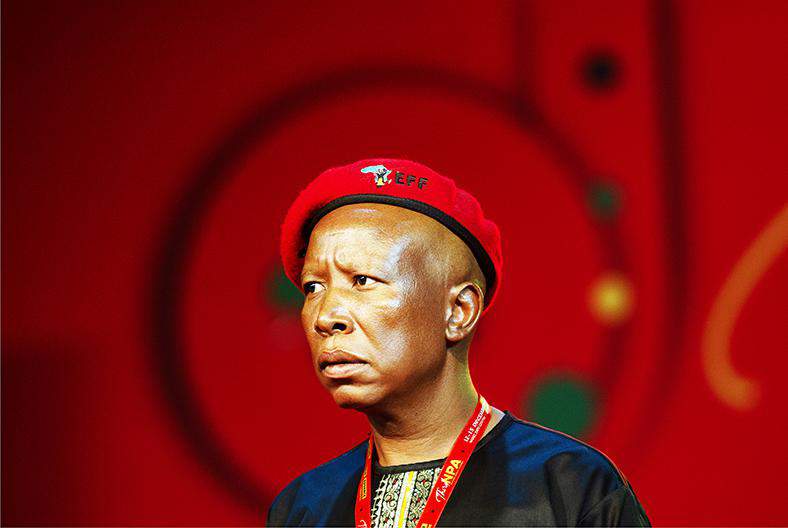
In a media statement, the EFF, led by Julius Malema, described the gazetted policy direction as “unlawful” and accused Minister Malatsi of deliberately subverting South African law to accommodate Starlink.
According to the party, the directive would allow companies like Starlink to avoid the long-standing requirement that telecommunications operators have at least 30% local ownership.
“This ridiculous policy directive means that companies such as Starlink would no longer need to comply with the 30% local ownership requirements which protect our local telecommunications industry,” the EFF said.
The party argued that ownership requirements could instead be replaced with what it described as “less transformative” measures, such as donations of infrastructure determined at the discretion of foreign investors.
Job losses and security concerns raised
The EFF said it had consulted with stakeholders in the ICT industry who warned that Starlink’s entry into the South African market could threaten local jobs.
The party also raised national security concerns, claiming that Starlink’s operations could pose a risk given Musk’s public hostility towards South Africa.
“For an unrepentant racist and megalomaniac like Elon Musk to enter the telecommunications market in South Africa, granting him possible control of infrastructure in the long term, is irresponsible,” the statement said.
While the language reflects the EFF’s political position, the party insists its objections are grounded in economic sovereignty and national security considerations.
Minister rejects claims of favouritism
Minister Malatsi has rejected suggestions that the policy was designed to benefit Starlink or any specific company.
When gazetting the final policy direction on Friday, 12 December, Malatsi said its purpose was to ensure that “the full scope of economic empowerment is properly recognised and applied” within the ICT sector.
Without mentioning Starlink or Musk, Malatsi said the department had received more than 19,000 public submissions on the draft policy, with 90% supporting it for the regulatory clarity it provides and its potential to expand access to high-speed internet.
He added that the policy “reinforces regulatory parity, does not favour any entity, bypass the Electronic Communications Act, or weaken transformation”.
Investment and infrastructure promises
Malatsi first published a draft of the EEIP policy direction in May, arguing that existing legislation limited how foreign investors could contribute to transformation beyond traditional equity ownership.
He said the changes were intended to attract investment, particularly in operating licences and digital infrastructure.
In June, Business Day reported that Starlink, which operates under Musk’s aerospace company SpaceX, hopes to invest more than R2 billion in South Africa should it be allowed to operate locally.
The investment would reportedly include financing telecommunications infrastructure and providing free internet access to 5,000 schools across the country.
BEE debate intensifies
Critics of the policy argue that the EEIP framework could be used to bypass BEE requirements, which mandate that foreign investors hold at least 30% local ownership.
Supporters counter that alternative empowerment models could accelerate connectivity in underserved areas without undermining transformation goals.
As the debate intensifies, Starlink has become a lightning rod for broader tensions over economic transformation, foreign investment and digital sovereignty in South Africa.