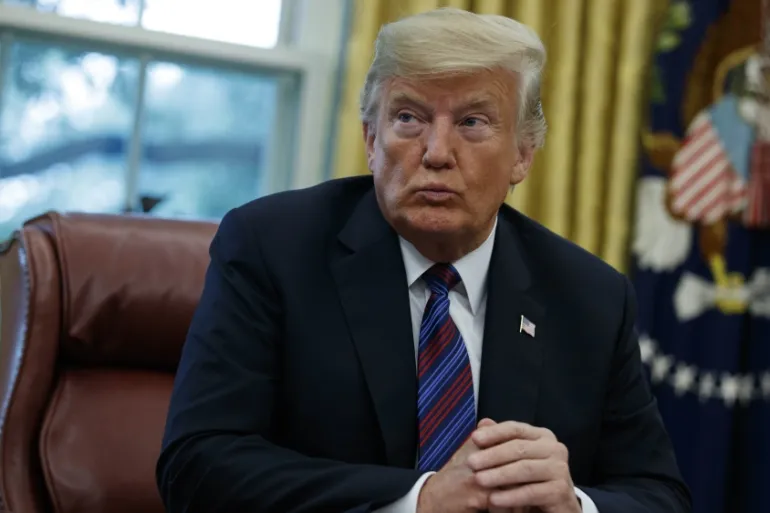
US President Donald Trump has announced that South African President Cyril Ramaphosa is expected to visit him next week for high-level discussions amid spiraling diplomatic tensions between the two nations.
Trump made the statement during a press conference in Washington, where he also confirmed the arrival of 49 Afrikaner refugees—individuals he claims are fleeing “genocide” in South Africa.
“Now the South African leadership is coming to see me, I understand sometime next week,” Trump said, referencing Ramaphosa’s imminent visit.
This development comes as US–South Africa relations reach a historic low, following a string of punitive executive orders under Trump’s return to political influence. These have included:
- Termination of US foreign aid to South Africa
- Imposition of high import tariffs
- Expulsion of South Africa’s ambassador to Washington, Ebrahim Rasool
- Sharp criticism of South Africa’s foreign policy, particularly its ICJ genocide case against Israel
Trump Defends Afrikaner Citizenship Offer
During the briefing, Trump doubled down on his controversial stance, stating that white South African farmers are facing “brutal killings” and land seizures.
“It’s a genocide taking place,” Trump said. “Farmers are being killed. They happen to be white. But whether they’re white or black makes no difference to me.”
He claimed the US is offering citizenship to Afrikaner families to help them escape violence. The 49 arriving in Washington on Monday would be the first batch of what he called humanitarian admissions—a dramatic policy reversal from his earlier administration’s stance on refugees.
South Africa Pushes Back
Earlier on Monday, International Relations Minister Ronald Lamola confirmed that preparations for Ramaphosa’s US visit were at an advanced stage. However, the South African government has rejected Trump’s genocide claims, pointing to the lack of credible data supporting the assertion that white farmers are being systematically targeted.
Lamola emphasized that South Africa remains committed to non-racial land reform, and clarified that while the Expropriation Act allows for land expropriation without compensation, it has not yet been enforced.
“There is no evidence supporting the notion that white farmers are being singled out or exterminated,” Lamola said. “We must not allow inflammatory rhetoric to derail diplomatic cooperation.”
G20 Threats and Diplomatic Fallout
Trump also hinted he may boycott the G20 summit in Johannesburg this November unless “the situation is taken care of.” His reference likely targets South Africa’s decision to proceed with land expropriation legislation and its ICJ genocide case against Israel.
The rhetoric signals a growing diplomatic rift, with potential ramifications for trade, security cooperation, and South Africa’s global standing. Trump’s inflammatory claims are seen by critics as a strategic political play aimed at influencing both domestic and foreign constituencies.
What’s Next?
Ramaphosa’s visit to the US—assuming it proceeds—will likely focus on mending diplomatic relations, challenging the genocide narrative, and reaffirming South Africa’s position on land reform and international law.
The South African government has not yet confirmed whether Ramaphosa will meet Trump privately or formally, and it’s unclear if the meeting will include other US officials or be limited to Trump’s private team.