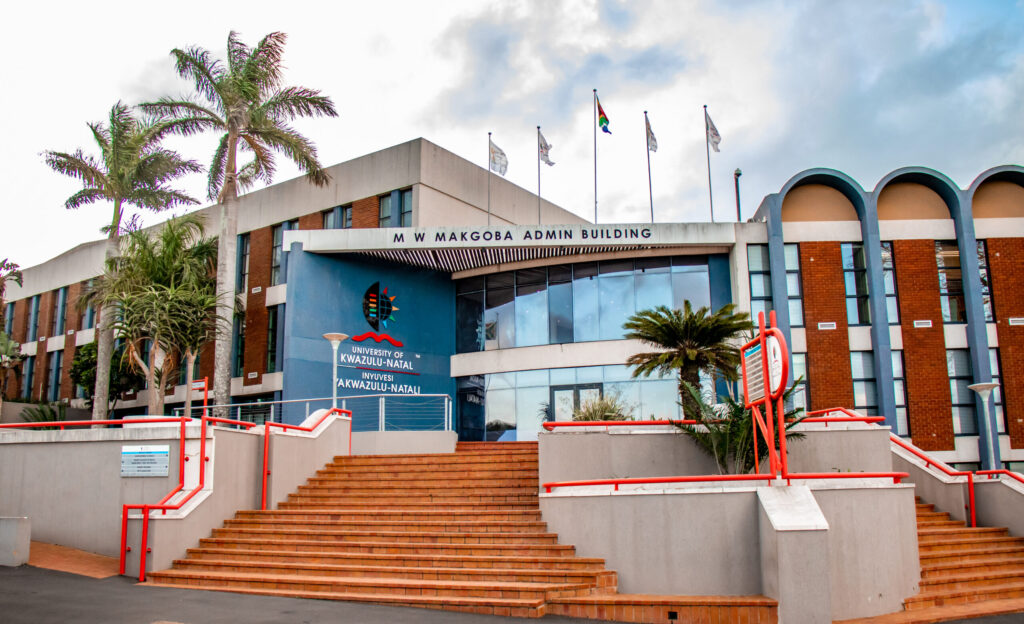
A corruption case involving a Durban couple, their co-accused, and the University of KwaZulu-Natal (UKZN) has resurfaced, reigniting one of South Africa’s most notorious higher education scandals.
Varsha and Hiteshkumar Bhatt, along with Preshni Hiramun, Muhammad Haniff, Bhavik Bhatt, Salman Noor Mohamed, and Mirriam Cassim, appeared this week before the Durban Regional Court. The group faces corruption charges under the Prevention and Combating of Corrupt Activities Act, with allegations dating back to early 2017.
According to prosecutors, the accused allegedly offered bribes of up to R50,000 to a senior IT specialist at UKZN’s Westville campus, Ruth Sekati, in exchange for manipulating admission records to secure entry into the Bachelor of Pharmacy programme for unqualified candidates.
The case was originally withdrawn in 2018 after the State requested an adjournment, but the National Prosecuting Authority (NPA) has since revived the matter following fresh investigations.
“These have now been completed and have resulted in the re-enrolment of the matter. All the accused are on warning. The case returns to court on March 3, 2026, for a pre-trial conference,”
said NPA spokesperson Natasha Ramkisson-Kara.
Defense attorneys have expressed frustration at the case’s revival, calling the delay “unjust.”
Rajesh Singh, representing the Bhatts, said his clients were confident they would be acquitted, while Sandeep Singh, lawyer for Haniff, described his client’s arrest as “shocking” and vowed to fight the charges.
The Roots of the UKZN Admissions Scandal
The corruption allegations form part of a much broader investigation into admissions irregularities at UKZN’s Nelson R. Mandela School of Medicine.
In 2021, UKZN confirmed that it had spent more than R73 million on Operation Clever, a four-year forensic probe into claims of “places for sale” within the university’s medical and pharmacy schools. The probe, launched after a 2016 Sunday Tribune exposé, revealed that a criminal syndicate involving both staff and external actors had been selling university placements.
The KPMG-led investigation, commissioned by former UKZN Vice-Chancellor Dr. Albert Van Jaarsveld, identified 31 implicated employees, several of whom were suspended. The findings were later handed to the Hawks and the NPA for prosecution.
“The University uncovered a criminal syndicate working with a small number of UKZN employees to admit students to the medical school. The internal investigation was concluded, and the matter was handed over to the State,”
said Normah Zondo, UKZN’s Executive Director of Corporate Relations, in a 2021 statement.
Ongoing Governance Challenges at UKZN
UKZN has faced repeated scandals involving governance, security, and procurement.
Just last month, the Parliamentary Portfolio Committee on Higher Education flagged “worrying governance failures” after discovering that a private security company had allegedly “captured” the university’s Risk Management Services. A former employee facing disciplinary charges was reportedly running operations through Ungoti Security Services, prompting concerns about student safety and financial misconduct.
In May 2023, three former staff members and three ex-student leaders — including former SRC presidents — were arrested in connection with an R80 million student accommodation fraud scheme. Charges against most of the accused were later withdrawn.
The recurring scandals have led to mounting calls for stronger accountability and oversight within one of South Africa’s top universities.
As the revived medical school corruption case heads toward trial in 2026, the spotlight once again falls on UKZN’s internal controls and its efforts to rebuild public trust.