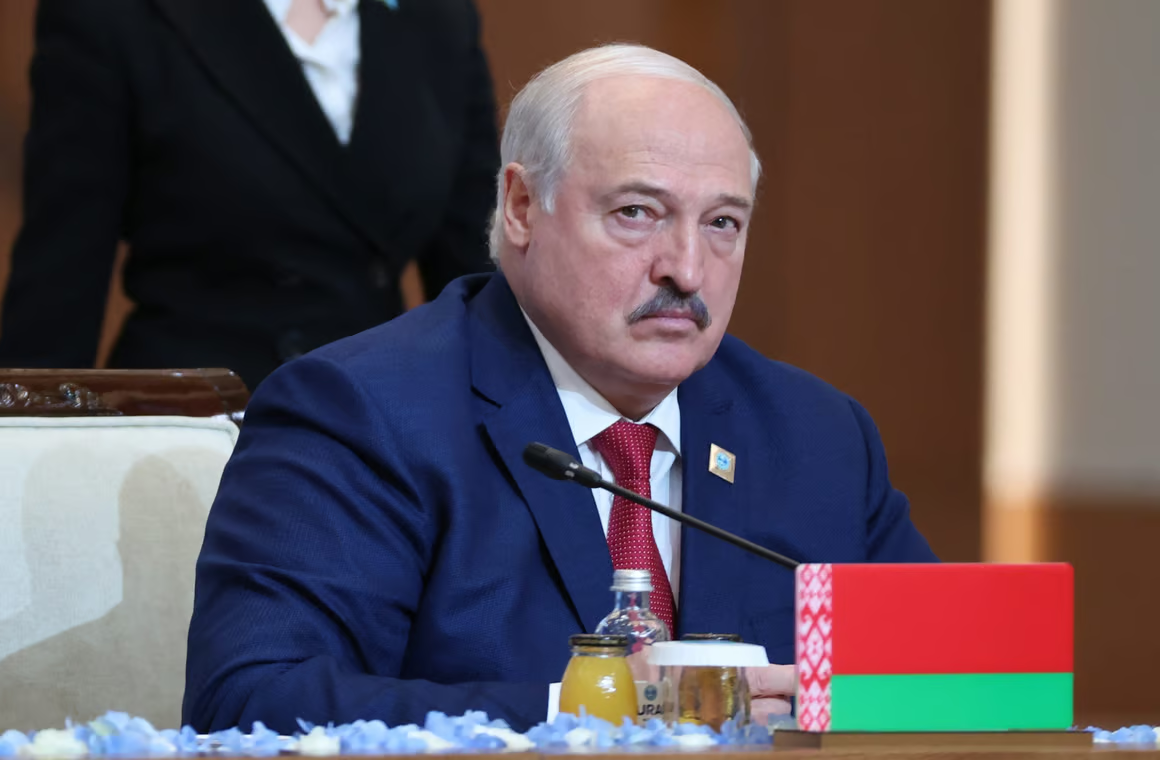
The European Union has threatened new sanctions against Belarus following President Alexander Lukashenko’s widely disputed seventh consecutive election victory. The vote, which reportedly awarded Lukashenko 88% of the ballot, has been condemned as neither free nor fair.
EU foreign policy chief Kaja Kallas and Enlargement Commissioner Marta Kos criticized the election in a joint statement, citing repression of human rights, political exclusion, and restricted media access in Belarus.
“The relentless and unprecedented repression… has deprived the electoral process of any legitimacy,” they said, further urging the release of political prisoners, including an EU delegation employee.
The EU hinted at “restrictive and targeted measures” against the Belarusian regime but did not provide details on the timeline or targets of the proposed sanctions.
Western Leaders Slam Lukashenko’s Rule
Across Europe, leaders expressed outrage at the election results.
Germany’s Foreign Minister Annalena Baerbock declared it “a bitter day for all those who long for freedom and democracy” in Belarus. Meanwhile, Poland’s Foreign Minister Radoslaw Sikorski mocked the results on X, sarcastically asking if the remaining 12% of voters would “fit in the prisons.”
A History of Repression
The 2020 Belarusian election, which sparked mass protests, saw a similar backlash from Western nations. The protests led to 65,000 arrests, with many demonstrators alleging torture and mistreatment. Since then, around 1,200 political prisoners remain incarcerated, and half a million Belarusians have fled the country.
Media freedom watchdog Reporters Without Borders filed a case against Lukashenko at the International Criminal Court, accusing him of suppressing free speech. The group reported that 43 journalists remain imprisoned, with 397 arrests since 2020.
Lukashenko Dismisses Criticism
At a four-hour press conference, Lukashenko denied accusations of human rights violations and dismissed claims about political prisoners.
“They are not political prisoners. They violated the Criminal Code… You can say our law is bad, but it is the law,” he said, adding that some individuals were released “based on the principles of true humanity.”
Lukashenko remained defiant against Western criticism, boldly stating, “I don’t give a damn about the West.”
Belarus’ Role in the Ukraine Conflict
A close ally of Russian President Vladimir Putin, Lukashenko has allowed Belarusian territory to be used for Moscow’s military operations, including the 2022 invasion of Ukraine.
During the press conference, Lukashenko predicted a resolution to the war by 2025 but warned that conflicts among Slavic nations often endure for extended periods.
Outlook
As the EU prepares to escalate sanctions against Belarus, experts remain skeptical of their impact. Lukashenko’s deep ties to Russia and dismissive stance toward the West suggest limited leverage for Western nations in changing his behavior.
With widespread human rights violations and mounting international condemnation, Belarus’ political and humanitarian crisis shows no signs of abating.