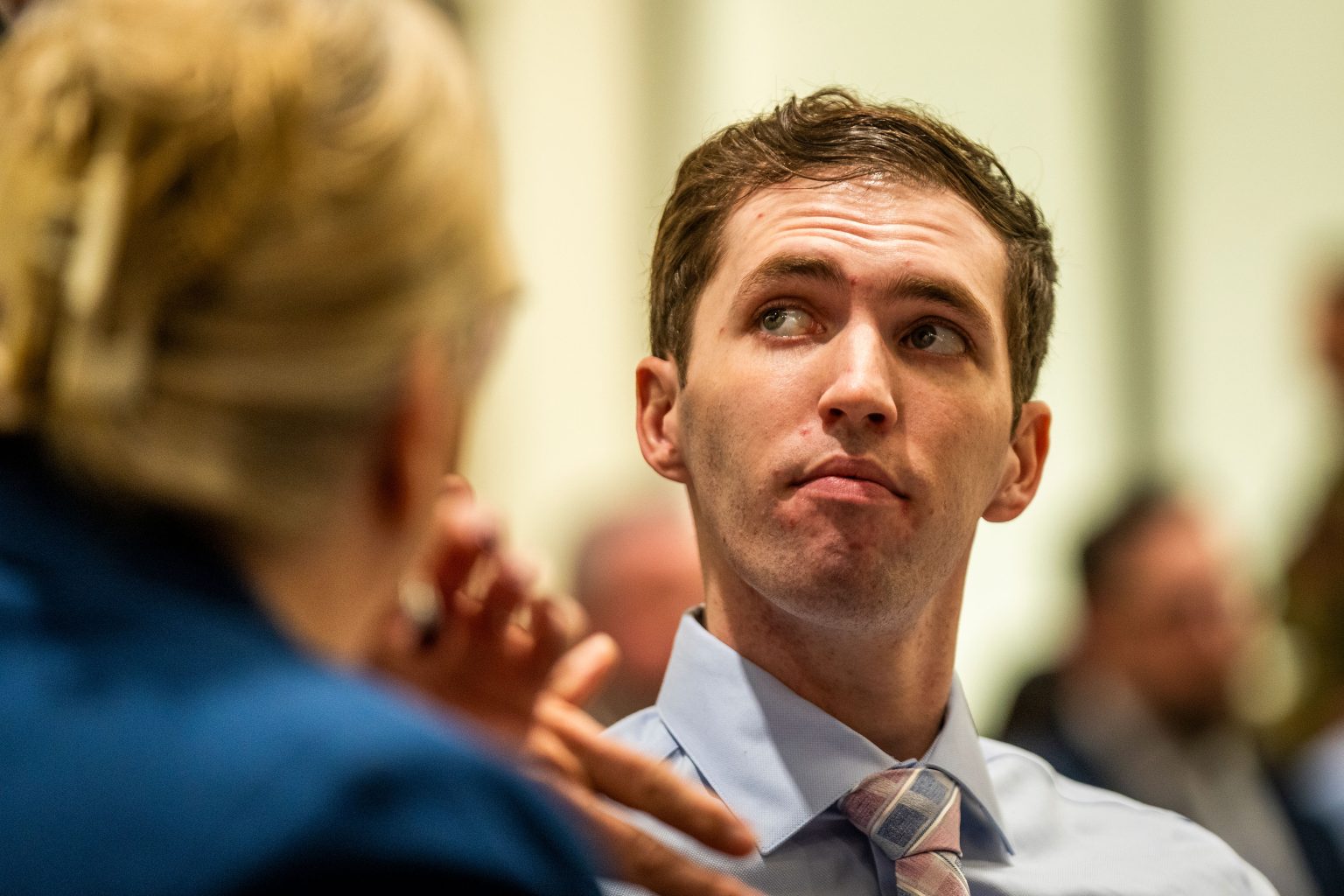
The man accused of killing conservative activist Charlie Kirk has made his first in-person court appearance, marking a significant moment in a case that continues to draw intense national attention. The accused, 22-year-old Tyler Robinson, appeared before a Utah judge on Thursday as the court weighed how much media access should be granted during future proceedings.
Robinson faces multiple charges, including aggravated murder, and could face the death penalty if convicted. He has not yet entered a plea.
His court appearance followed a dramatic sequence of events in September, when Kirk was shot at an open-air event at Utah Valley University. Robinson turned himself in after an extensive manhunt, reportedly confessing the crime to his father — who recognised him from images released by authorities and convinced him to surrender.
On Thursday, Robinson arrived in court with restraints on his wrists and ankles. Wearing civilian clothes — a shirt, tie and trousers — he smiled at family members seated in the front row. His mother, father and brother were present in the courtroom.
The main tension in Thursday’s hearing revolved around press access. Attorneys for Robinson and the Utah County Sheriff’s Office sought to ban cameras, arguing that heavy media coverage could jeopardise his right to a fair trial.
On the opposite side, a coalition of national and local media outlets argued for transparency. Kirk’s widow, Erika Kirk, has also pushed for openness, especially as she continues to publicly confront conspiracy theories surrounding her husband’s death. Speaking to Fox News last month, she emphasised: “We deserve to have cameras in there.”
The judge agreed there was public interest in transparency and confirmed that cameras would be allowed in court. However, he placed tight limits on what could be shown. While Robinson may continue wearing civilian clothing during pre-trial hearings to avoid prejudicing jurors, he must remain in restraints — though filming or photographing the restraints is strictly prohibited.
The court also considered whether an October hearing — held behind closed doors — should now be partially or fully unsealed. Part of Thursday’s session involved reviewing the audio and transcript from that private hearing. Judge Tony Graf said he needed more time before ruling on whether it should be released.
“I need to hear what should or should not be sealed or protected,” he said, adding that rushing such an important decision risked “missing the mark.” He postponed his ruling to 29 December.
The judge also issued a publicity order, barring attorneys on both sides from making extrajudicial statements about the case — a move designed to limit public speculation and protect the integrity of the trial.
Another portion of Thursday’s hearing was streamed online, offering limited public access while the court continues to balance transparency with legal fairness.
Robinson is expected to return to court for his next in-person appearance on 16 January, as the high-profile case continues to unfold under heavy national scrutiny.
The trial now sits at the intersection of public interest, judicial caution and the lingering shock still felt across conservative political circles — an uncomfortable reminder of how modern legal battles often play out in full public view.