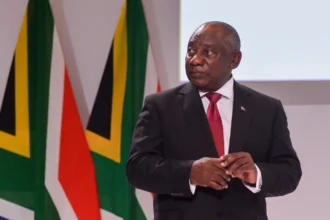
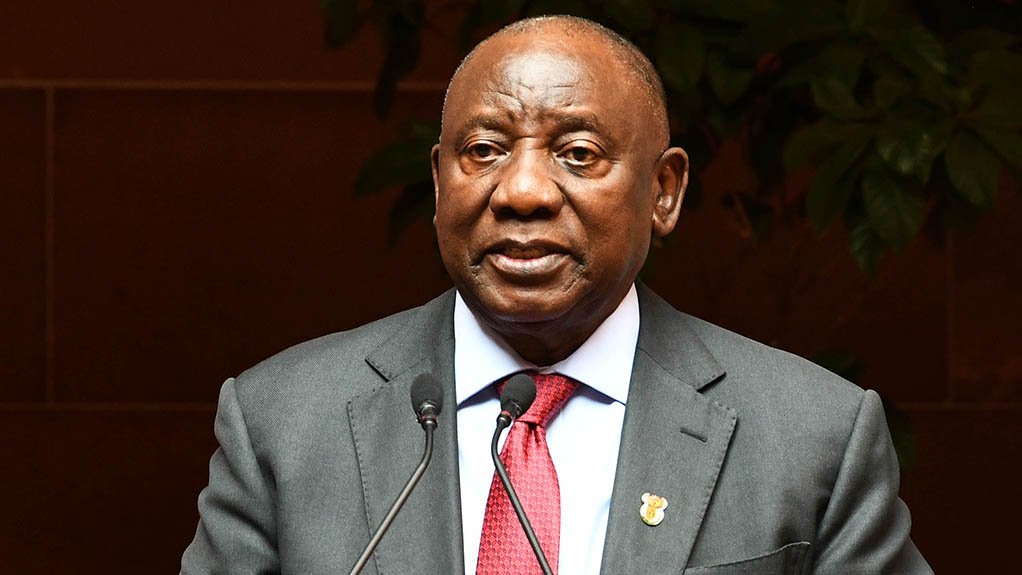
President Cyril Ramaphosa has come out strongly in defence of Black Economic Empowerment (BEE), asserting that it is not redress policies like BEE, employment equity, or affirmative action that are throttling South Africa’s economic growth — but rather the continued concentration of ownership in a few hands.
In a heated parliamentary Q&A session, Ramaphosa responded to Freedom Front Plus (FF Plus) leader Dr Corné Mulder, who had questioned whether the president was willing to overhaul economic policies that, in his party’s view, were failing to spur growth.
Mulder pointed to policies such as BEE and the Expropriation Act as barriers to progress. The FF Plus — a partner in the country’s 10-party Government of National Unity — is a vocal critic of race-based redress.
Ramaphosa, however, was unwavering. In his response, he dismissed the idea that BEE is to blame and instead turned the spotlight on South Africa’s enduring structural inequalities and the legacy of apartheid.
“I’m rather surprised and taken aback when I hear that policies of black economic empowerment militate against the growth of our economy,” Ramaphosa told MPs. “That I find quite surprising, because I work from the starting point that our economy was held back over many years by the racist policies of the past.”
Historic Exclusion Still a Modern Reality
Ramaphosa reminded the House that South Africa’s apartheid history systematically excluded black South Africans from meaningful economic participation. They were seen as labourers — “hewers of wood and drawers of water” — not as producers or consumers.
With democracy came the opportunity to correct that injustice, Ramaphosa argued, and policies like BEE were designed not to punish, but to enable broader participation.
“Black people must play a productive role as well,” he said. “Why can’t they be rich too?”
The President’s comments come as South Africa’s redress framework finds itself once again under scrutiny. A directive from the Department of Communications and Digital Technologies is reportedly considering loosening BEE requirements for satellite internet service providers. The policy shift could allow companies like Starlink, owned by tech billionaire Elon Musk, to operate in the country without transferring ownership locally — a move that has sparked fresh debate.
Adding fuel to the fire, the Democratic Alliance (DA) has challenged Section 15A of the Employment Equity Amendment Act in court, citing what it says are overreaches in redress mandates.
Criticism of BEE Remains Persistent
Critics, including DA federal chair Helen Zille, argue that BEE has been used to legitimise corruption and fuel State Capture. Others point out that after nearly three decades of empowerment legislation, inequality in South Africa remains stubbornly high, with unemployment and poverty disproportionately affecting black South Africans.
While Ramaphosa acknowledged the challenges, he insisted that the solution is not to abandon redress but to refine and broaden it.
“Our objective is to spread economic participation broadly, and I will hold on to the argument that the more we have previously disadvantaged people playing a role in the economy of their own country, the better it is.”
Ownership Concentration: The Real Bottleneck?
Citing findings from the World Bank and the International Monetary Fund, Ramaphosa said the real threat to economic growth is the concentration of capital and market ownership.
“Ownership of the economy is in far too few hands — ownership has not spread,” he said. “It is the partial and exclusive ownership of the means of production in our country that is holding this economy from growing.”
He pointed to the Constitution, which calls for equality and redress, as justification for policies that seek to correct imbalances in ownership and access.
A Broader Vision for Economic Participation
Ramaphosa also touched on the symbolic and material importance of black ownership in South Africa.
“There’s nothing that gives our people as much joy — particularly black people — as they go around and they find that this production facility is owned by a black person. It warms one’s heart, it makes us feel so good.”
He reflected on the contrast between apartheid-era advertising, which excluded black South Africans, and the present, where black representation is increasingly visible — a sign of progress, he said, though not yet enough.
And in a pointed message to Mulder, Ramaphosa compared the historical empowerment of Afrikaners post-colonial rule to the need for similar upliftment of black South Africans.
“If you look at the history of your people, they were held back by the English and… they became more and more economically empowered… Why can’t the same be done for black people?”
What’s Next for South Africa’s Economic Policy?
Ramaphosa confirmed that the Government of National Unity would be spending “a considerable amount of hours” in the coming days revisiting economic strategy and growth plans.
The challenge now, he said, is not whether BEE should exist — but how to ensure that empowerment is meaningful, inclusive, and not exploited for narrow gain.
As the debate over economic transformation intensifies, Ramaphosa’s remarks draw a clear line: South Africa’s path forward must confront the injustices of the past while forging an economy that benefits the many, not just the few.