
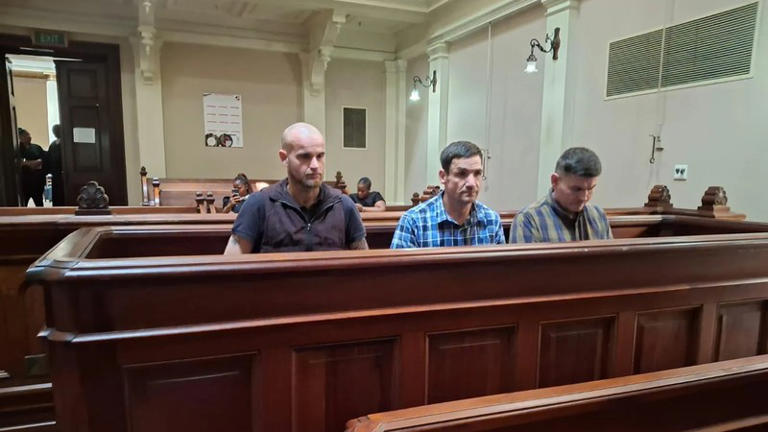
The North Gauteng High Court in Pretoria has handed down life sentences to three farmers convicted of the brutal and premeditated murder of a farm resident, in a case the court determined was driven by racial motives. The judgment sends a strong message about accountability in violent crimes that undermine South Africa’s constitutional values.
Jaco Wessels Kemp (36), Louise Coetzee (29), and Gert Frederik van der Westhuizen (38) were found guilty of murdering Dumisani Phakathi in September 2023. Alongside their life sentences, the court ruled that all three are unfit to possess firearms and ordered the immediate surrender of any weapons, licences, and related permits.
Attack at a Rural Farm Gathering
According to the National Prosecuting Authority (NPA), the incident unfolded on 16 September 2023 at a chicken farm in Mamokgalieskraal, near Brits. The accused had been socialising at a braai when they noticed Phakathi walking past the property en route to collect water from a nearby furrow—a source commonly used by local residents.
Court evidence revealed that the trio approached Phakathi, assaulted him, and forcibly dragged him into a storage facility on the farm. The attack continued until he died from his injuries.
Grim Discovery on the R511
In the early hours of the following day, police conducting a routine stop-and-search operation on the R511 made a disturbing discovery. Officers stopped a bakkie driven by Kemp and Coetzee, which was loaded with refuse bags.
Upon inspection, police noticed human limbs protruding from beneath the bags. Further examination confirmed the body of Phakathi, severely injured and with his head covered in plastic. Kemp and Coetzee were arrested at the scene, while van der Westhuizen surrendered to authorities the next day.
Court Rejects Defence Arguments
During the trial, all three accused pleaded not guilty and attempted to deflect blame onto one another. However, prosecutors presented compelling witness testimony and evidence that ultimately secured convictions on all counts.
In mitigation, the defence argued for a lesser sentence, citing time already spent in custody and the accused’s roles as parents. The court was not persuaded.
The prosecution maintained that the killing was both senseless and executed with extreme cruelty. Evidence showed that the accused attempted to dispose of the victim’s body in rubbish bags—an act the court viewed as aggravating.
Judge Finds No Remorse, Confirms Racial Motive
In delivering judgment, the court emphasised the absence of remorse among the accused and the lack of any justifiable motive for the attack. The judge concluded that the only reasonable inference, based on the evidence presented, was that the murder was racially motivated.
The ruling underscores the seriousness with which South African courts treat crimes rooted in racial hatred, particularly in rural communities where tensions can have devastating consequences.
A Broader Reflection on Justice and Accountability
This case has once again drawn attention to issues of violence, race, and justice in South Africa’s agricultural sectors. While the sentence may bring a measure of closure, it also serves as a stark reminder of the work still needed to build safer and more equitable communities.
Call to Action:
Stay informed on developments shaping South Africa’s justice system and social landscape—explore more in-depth reports and analysis on Virgo News.