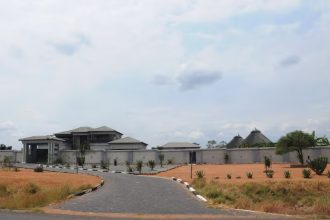
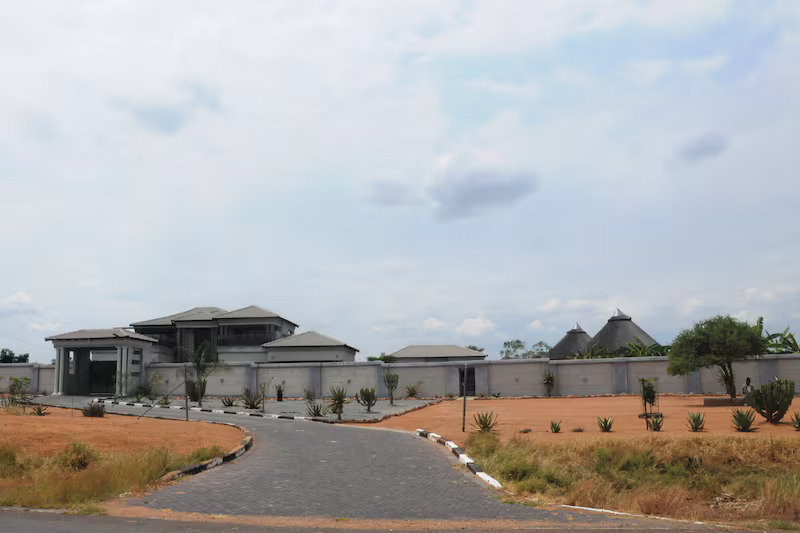
A luxurious double-storey mansion in Setlaboswane village, about 40km north of Marble Hall, has been flagged by investigators as the alleged product of corruption within the Department of Home Affairs (DHA).
According to reports, the property belongs to Hellen Nkogatse, a former senior administrator tasked with approving visa applications. Between 2021 and 2023, she reportedly approved 426 visas while earning a monthly salary of between R25,000 and R30,000.
During that same period, she built the mansion and allegedly funded the tarring of the road leading to it.
SIU findings
The Special Investigating Unit (SIU) revealed that Nkogatse received at least R1.3 million in suspicious payments linked to fraudulent visa approvals.
Investigators found what they described as a significant disparity between her official income and accumulated assets. The SIU further reported a 67% fraudulent approval rate connected to her visa decisions.
“The disparity between her official salary and property holdings is a clear indicator of corruption. Combined with the documented suspicious payments and a 67% fraudulent approval rate, the evidence points to corrupt enrichment,” the SIU stated.
Colleagues allegedly involved in the broader scheme are reported to have earned more than R10 million through money-laundering tactics, including the use of fake construction companies claiming to purchase non-existent building materials.
Other officials implicated
Another DHA official, Daphne Mannye, has also been implicated. According to the SIU, she allegedly received R6.7 million and R2.14 million via her husband Eric Mannye’s construction company, Solusalem, between 2020 and 2023.
Internal DHA audits reportedly flagged her approval of 459 Nigerian visas processed through the Cape Town VFS centre.
Mannye has denied wrongdoing, stating that she was dismissed over what she described as a misunderstanding.
Matter referred for prosecution
The SIU has referred Nkogatse, Mannye and other implicated officials to the National Prosecuting Authority (NPA) for possible criminal prosecution.
The investigation highlights how corruption within a key government department can redirect public trust and state authority into private enrichment — with rural communities like Setlaboswane becoming the unlikely stage for conspicuous wealth allegedly built on fraudulent schemes.
When bureaucratic systems designed to regulate movement and protect borders become revenue streams for insiders, the damage extends beyond money. It chips away at institutional credibility — and that, unlike a mansion, is far harder to rebuild.