

The Botswana Unified Revenue Service (BURS) has officially announced new travel regulations that will affect motorists crossing into South Africa with Botswana-registered vehicles.
New Rule Effective June 2026
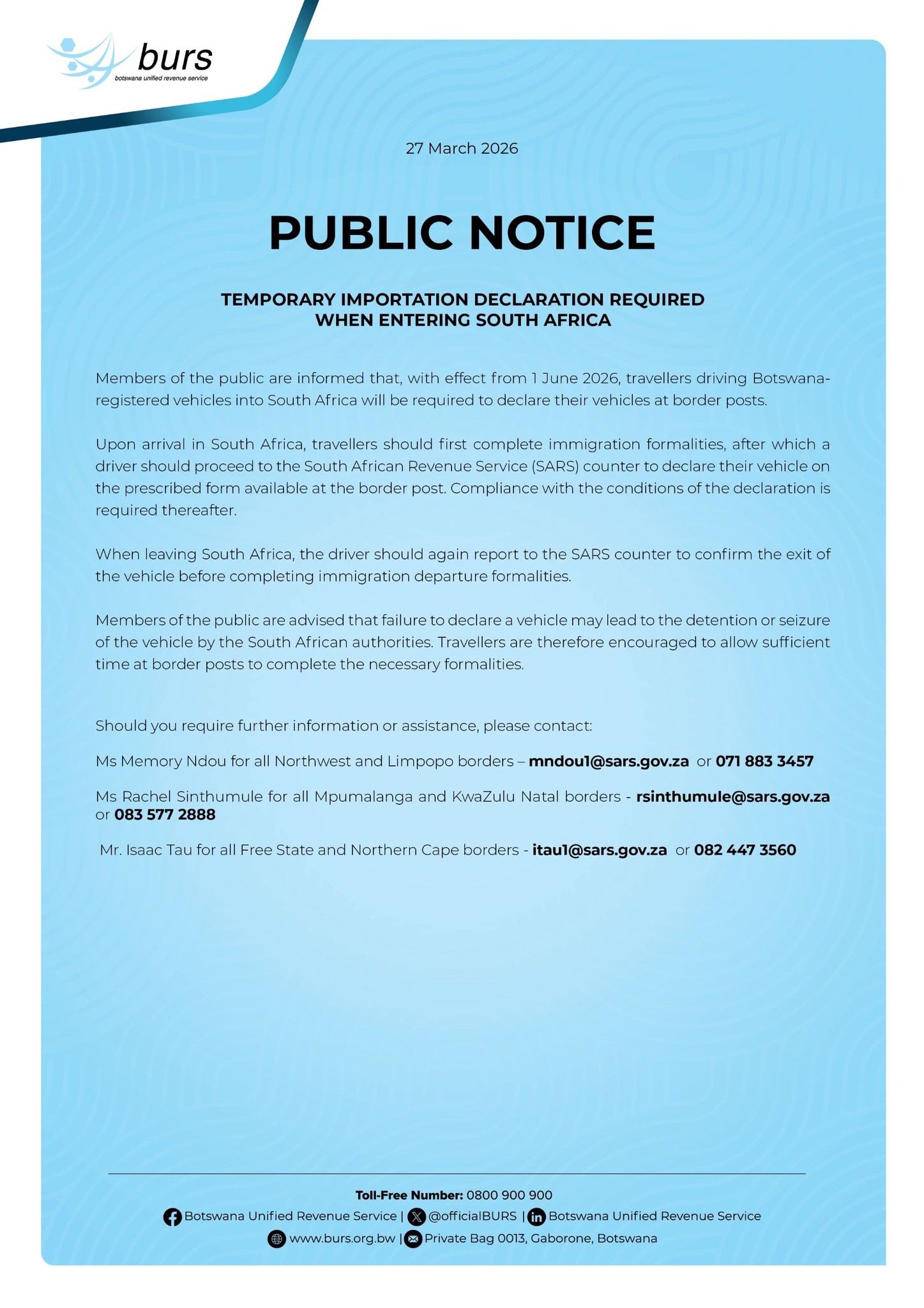
According to the public notice dated 27 March 2026, all travellers driving Botswana-registered vehicles into South Africa will be required to complete a temporary importation declaration at border posts starting 1 June 2026.
This measure is aimed at improving compliance, monitoring cross-border vehicle movement, and strengthening customs control processes.
What Travellers Need to Do
Upon arrival in South Africa, travellers must:
- Complete standard immigration procedures
- Proceed to the South African Revenue Service (SARS) counter
- Declare their vehicle using the prescribed form available at the border
Once the declaration is completed, travellers are expected to comply with all outlined conditions during their stay.
Exit Requirements
When leaving South Africa, travellers must again report to the SARS counter to:
- Confirm the vehicle’s exit
- Complete departure formalities
This step ensures that the temporary importation process is properly closed and recorded.
Important Warning to Travellers
Authorities have emphasized that failure to declare a vehicle may result in:
- Detention of the vehicle
- Possible seizure by South African authorities
Travellers are therefore strongly encouraged to allow extra time at border posts to complete all required procedures without delays.
Regional Contact Points for Assistance
For further information, travellers can contact designated officials based on border regions:
- North West & Limpopo Borders: Ms Memory Ndou
- Mpumalanga & KwaZulu-Natal Borders: Ms Rachel Sinthumule
- Free State & Northern Cape Borders: Mr Isaac Tau
These representatives are available to assist with queries related to compliance and procedures.
Strengthening Cross-Border Travel Compliance
This new requirement reflects growing efforts by both Botswana and South Africa to enhance border management, compliance, and traveller accountability.
For frequent cross-border travellers, transport operators, and tourism stakeholders, this development highlights the importance of staying informed and prepared to ensure smooth and lawful travel between the two countries.