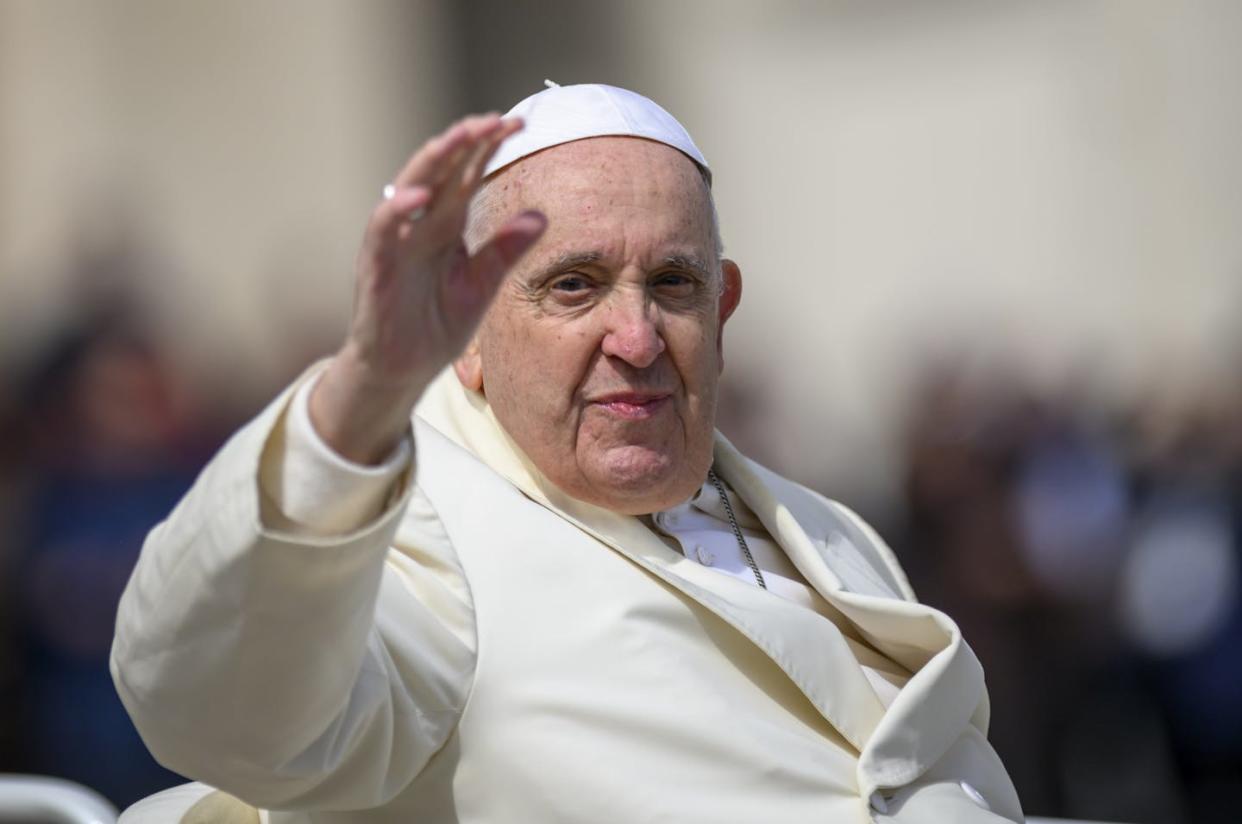
Pope Francis, the first Latin American Pope and a transformative figure in the Catholic Church, has died aged 88 following a prolonged battle with double pneumonia and kidney complications, Vatican officials confirmed on Monday.
The news was announced by Vatican camerlengo Cardinal Kevin Farrell, who praised the pontiff’s lifelong commitment to service and compassion.
“His entire life was dedicated to the service of the Lord and of his Church,” Cardinal Farrell said. “He taught us to live the values of the Gospel with faithfulness, courage, and universal love, especially for the poorest and most marginalised.”
- Advertisement -
Pope Francis passed away just one day after appearing in public on Easter Sunday, where he offered blessings to thousands gathered at St Peter’s Square and made a brief tour in the Popemobile—a moment that now serves as a poignant farewell.
A Historic Papacy Comes to an End
Born Jorge Mario Bergoglio in Buenos Aires, Argentina, on December 17, 1936, Pope Francis was the first Jesuit and the first non-European to lead the Catholic Church in over a millennium. He ascended to the papacy in March 2013 following the resignation of Pope Benedict XVI, becoming the 266th Pope in the Church’s history.
Prior to his religious calling, Bergoglio earned a chemical technician’s diploma from Escuela Técnica Industrial and worked in a food laboratory. He also held odd jobs—including janitor and bouncer—before joining the Society of Jesus in 1958. His rise through the ranks of the Argentine Church culminated in his appointment as Cardinal by Pope John Paul II in 2001.
His election came during the fifth round of voting in the 2013 papal conclave, a result that shocked many but was quickly embraced worldwide as a fresh and humble choice for a Church navigating modern complexities.
A Papacy of Firsts and Fierce Advocacy
During his 12-year papacy, Pope Francis became widely known for his advocacy on behalf of the poor, his calls for climate action, and his efforts to modernise the Church while maintaining its core traditions. His approachable style, plain speech, and preference for modest living endeared him to many across the globe.
He championed causes ranging from economic inequality and refugee rights to environmental stewardship, often pushing the Church into previously avoided territory. His encyclicals and public addresses made headlines for addressing issues like capitalism, same-sex civil unions, and abuse within Church ranks—sparking both admiration and criticism.
Health Struggles in Later Years
Pope Francis had long struggled with respiratory issues. As a young man, he lost part of his lung due to a severe infection. In 2023, he was hospitalised for several days with pneumonia, raising concerns about his ability to continue in office.
Over recent weeks, his health deteriorated significantly. The Vatican confirmed that he had been hospitalised for an extended period due to a complex lung infection, which led to early stages of kidney insufficiency.
Despite these challenges, he remained active in his duties until the very end, including his surprise Easter appearance that delighted onlookers and offered hope for recovery.
Global Reactions and Funeral Preparations
Tributes have begun pouring in from leaders and faith communities worldwide. The Vatican is now preparing for a period of official mourning, followed by a papal funeral and conclave to elect the next pontiff.
Details regarding funeral services are expected to be announced in the coming days, though it is anticipated they will take place in Vatican City, with dignitaries, religious leaders, and thousands of mourners in attendance.
Legacy of a People’s Pope
Pope Francis leaves behind a legacy defined by humility, reform, and a focus on mercy. His papacy was marked not only by symbolic gestures—like living in a modest guesthouse instead of the papal palace—but also by concrete efforts to steer the Church closer to the everyday lives of its followers.
He often described himself as a “sinner in need of God’s mercy,” a sentiment that shaped his approach to leadership and drew widespread respect beyond the Catholic community.
As the Catholic world now looks toward the future, many will remember Pope Francis not just as a leader of 1.3 billion people, but as a man who humanised one of the oldest institutions on earth—and did so with a voice that was both courageous and kind.