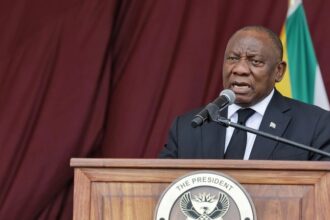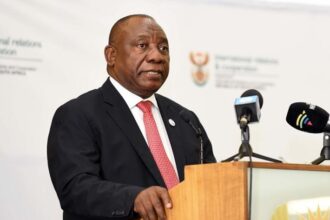
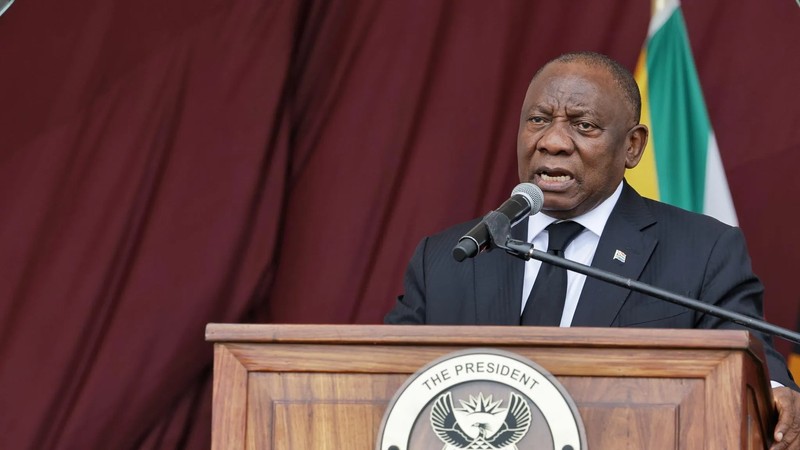
President Cyril Ramaphosa has warned that municipal managers who fail to ensure reliable water supply will face personal criminal charges under the National Water Act, with 56 municipalities already facing criminal cases for failing to meet their legal obligations.
Speaking during his State of the Nation Address, Ramaphosa said water shortages have become one of the country’s most urgent crises, alongside crime, affecting major cities, smaller towns and rural communities alike.
Recent protests in Gauteng, he noted, were driven in part by frustration over inadequate access to basic services.
Criminal accountability on the table
Ramaphosa said government will not hesitate to intervene where municipalities fail to deliver.
“We will hold to account those who neglect their responsibility to supply water to our people,” he said.
Government has already laid criminal charges against 56 municipalities. The next step, he announced, is to pursue charges against municipal managers in their personal capacity for violating the National Water Act.
This marks a significant shift from institutional accountability to individual criminal liability.
R156 billion infrastructure commitment
The President said more than R156 billion in public funding has been committed over the next three years for water and sanitation infrastructure.
Major projects include the Lesotho Highlands Water Project and the Ntabelanga Dam, part of the broader Mzimvubu Water Project in the Eastern Cape.
A new National Water Resource Infrastructure Agency is in the final stages of establishment. Its role will be to manage national water systems more effectively and mobilise funding.
“The problem is not water — it’s delivery”
Ramaphosa stressed that South Africa’s crisis is not primarily about water scarcity, but about failing infrastructure and governance.
Damaged pipes, poor maintenance, inadequate planning and years of neglect are at the core of the problem.
“There is no silver bullet,” he said.
The Water Services Amendment Bill will allow government to withdraw licences from water service providers that fail to deliver. If a municipality is unwilling or unable to provide services, another structure will be appointed to take over.
National Water Crisis Committee
To address the immediate emergency, Ramaphosa announced the formation of a National Water Crisis Committee, which he will chair.
The structure will coordinate national efforts, deploy technical experts and direct resources to struggling municipalities.
He drew comparisons to the National Energy Crisis Committee formed during the height of load shedding — a coordinated intervention that contributed to stabilising the electricity grid.
Revenue mismanagement under scrutiny
Another major issue, the President said, is financial mismanagement.
In many metros and towns, revenue collected from water services is diverted to other priorities, leaving insufficient funding for infrastructure maintenance.
To counter this, government has introduced a R54 billion incentive for metros to ensure that revenue from water, sanitation and electricity services is reinvested into pipes, reservoirs and pumping stations.
A deeper local government crisis
Ramaphosa acknowledged that water outages are symptoms of a broader local government breakdown.
Citing findings from the Auditor-General, he described municipalities as being marked by weak accountability, poor financial management, governance failures and instability.
Local administrations, he said, are often shaped more by patronage networks than by technical expertise.
“Arresting the decline of local government will require our collective action. We are now taking collective action,” he said.
![A worker checks labelling of bottles of beer at the production line of Dutch brewer Heineken factory on June 7, 2011 in Schiltigheim, eastern France, during an official visit announcing the group's goals for sustainable development, by reducing the amount of glass in some beer bottles' production, and lowering by 20 percent the energy needed at its Alsacian factory. [Photo by PATRICK HERTZOG/AFP via Getty Images]](https://myvirgo.co.za/wp-content/uploads/2026/02/heineken-plant-150x150.jpeg)