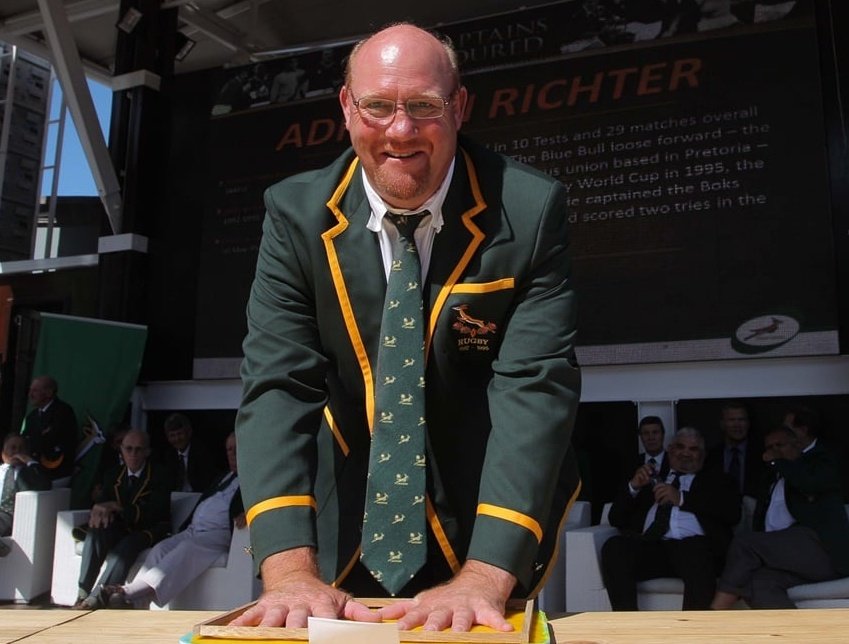
The financial hardship faced by former Springbok Adriaan Richter has sparked a renewed and deeply polarising debate around Black Economic Empowerment (BEE), after a former ANC MP publicly blamed transformation laws for the retired rugby player’s situation.
Richter, a member of South Africa’s iconic 1995 Rugby World Cup-winning squad, made headlines this week after auctioning off his winner’s medal and a miniature replica of the trophy in order to make ends meet. The medal was sold for R62 500, while the miniature trophy fetched R34 000.
Former ANC MP Weighs In
Reacting on social media platform X, former ANC MP Lawrence E McDonald expressed sympathy for Richter, but used the opportunity to criticise the governing party’s economic policies. McDonald, who left the ANC last year and has since positioned himself as a vocal opponent of what he calls “racial laws”, claimed BEE was at the heart of Richter’s financial difficulties.
In his post, McDonald wrote that Richter had been forced to sell memorabilia presented by Nelson Mandela “to survive”, adding that this amounted to what he described as “economic genocide against white South Africans”. He used hashtags such as #WhiteGenocide and #BEEFails, language that has previously drawn strong criticism from government and civil society groups.
Richter Speaks on Financial Pressure
Richter himself has spoken candidly about his situation, stressing that selling the memorabilia was not a choice made lightly.
“I definitely didn’t sell it because I wanted to,” he said. “It’s just because we live in South Africa, and I can’t find work. It’s not nice.”
He added that the decision was especially painful given the sentimental value of the items. “I have children who would love to have it. But in the end, we live in a completely different country. At my age, I can’t find work either. Nobody wants to hire me. It’s absolutely dire.”
Richter also claimed that he had struggled to secure contracts because of BEE requirements and said a series of poor harvests had worsened his financial position.
Reports Complicate the Narrative
Subsequent reports have indicated that Richter owns several farms and assets, and that he earns an estimated R50 000 a month in rental income. These revelations have added complexity to the public discussion, with some commentators questioning whether his situation reflects absolute destitution or broader financial strain linked to agricultural challenges and limited employment opportunities later in life.
A Broader, Sensitive Debate
BEE remains one of South Africa’s most contested policies, designed to address the deep economic inequalities created by apartheid. Supporters argue it is essential for redressing historical injustice, while critics say it has excluded some individuals from economic participation and failed to benefit the poorest South Africans.
Richter’s case has become a flashpoint in this wider debate, blending genuine human hardship with highly charged political narratives. While his personal struggle has evoked sympathy across racial and political lines, the framing of his situation has also highlighted how quickly individual stories can be absorbed into South Africa’s broader ideological battles.
For many South Africans, the episode raises uncomfortable questions about how the country supports its sporting heroes after retirement, how inclusive the economy truly is, and whether existing policies are achieving their intended outcomes without deepening social division.